
Hero Banner

City Revitalization Plan & The 10-Block Business Community Model

Empowering Communities Within The Prosperity Zone

City Revitalization Plan

Revitalization Banner
Phase 1

Phase 1
Planning and Policy

  • Designate Economic Prosperity Zones (EPZs)

    Use data on poverty rates, blighted properties, and business closures to identify specific inner-city areas as EPZs.

  • Establish a Master Development Corporation

    Create a public-private partnership responsible for coordinating the redevelopment. This body will oversee the planning, acquisition of properties, and management of the revitalization process.

  • Implement Flexible Zoning

    Amend local zoning ordinances within the EPZ to promote mixed-use development. This allows for residential and commercial spaces to coexist in the same building or on the same block, creating a vibrant, walkable community.

  • Secure Funding

    Utilize federal and state programs like Opportunity Zones, Community Development Block Grants (CDBG), and affordable housing and sustainable communities (AHSC) programs to attract private investment and secure financing.

Phase 1

Phase 2
Property Acquisition and Infrastructure

  • Acquire Blighted Properties

    The master development corporation will acquire vacant lots and condemned buildings within the EPZ. This can be done through direct purchase, land banks, or eminent domain if necessary.

  • Upgrade Utility Infrastructure

    Conduct a comprehensive survey of the existing electrical power grid, water, and sewer systems. Invest in modernizing and expanding infrastructure to support the new communities and businesses. This includes:

  • Implement Flexible Zoning

    Amend local zoning ordinances within the EPZ to promote mixed-use development. This allows for residential and commercial spaces to coexist in the same building or on the same block, creating a vibrant, walkable community.

    • "Smart Grid" Technology

      Implement smart grid technologies for greater energy efficiency, reliability, and faster outage detection and restoration.

    • Advanced Materials

      Use reliable, long-lasting materials for utility lines and components to improve resilience against weather and wear.

  • Improve Streetscapes

    Revitalize public spaces by improving sidewalks, adding green spaces, and enhancing lighting. Use a pedestrian-scaled streetscape design to create a safer and more welcoming environment.

Phase 1

Phase 3
Housing and Community Development

  • Prefabricated Housing Strategy

    Use smaller, approximately 700-square-foot, prefabricated and modular homes to rapidly and cost-effectively build new housing.

    • Cost Savings

      Prefabricated construction can reduce costs by up to 20% compared to traditional building, making homes more affordable.

    • Rapid Assembly

      Housing units are constructed off-site and then quickly assembled on-site, accelerating the timeline for community development.

    • Sustainable Materials

      Utilize energy-efficient and sustainable materials to lower residents' utility costs and reduce the community's environmental footprint.

  • Establish Mixed-Income Communities

    Integrate affordable homeownership and rental units for low-income residents with market-rate housing to avoid concentrating poverty. This creates socio-economically diverse and vibrant neighborhoods.

  • Foster Community Connections:

    Create public parks, community centers, and shared green spaces to encourage social interaction and improve resident well-being.

Economic Opportunity and Business Incentives

Business Design Incentives

  • Façade Improvement Grants

    Offer grants for small businesses to renovate their storefronts, creating a more attractive and uniform street presence.

  • Flexible Lease Agreements

    Provide tiered rent structures and rent abatement programs for new businesses, helping them get established with lower initial costs.

  • Technical Assistance

    Offer free business development assistance for new and existing businesses, covering everything from writing a business plan to navigating permits and regulations.
Building a Positive Opportunity Climate

  • Targeted Capital Investment

    Establish a local investment fund focused on small businesses within the EPZ. This could include microlending programs and venture capital for local entrepreneurs.

  • Workforce Development

    Partner with local educational institutions to offer job training programs for EPZ residents. This builds a skilled local workforce and connects residents with jobs in new and expanding local businesses.

  • Local Hiring Requirements

    Mandate that businesses receiving incentives hire a percentage of their employees from the local community, promoting neighborhood wealth-building.

  • "Legacy Business" Support

    Implement programs to support long-standing neighborhood businesses, recognizing their importance to the community's culture and history.

  • Green Business Initiatives

    Offer incentives for businesses that adopt sustainable practices, such as grants for energy-efficient equipment or tax credits for using renewable energy.

The 10-Block Business Community Model

Here is a 10-block business community that combines national chains with local businesses, focusing on creating employment, providing needed services, and building civic engagement.

Block 1
Food and Convenience Anchor

  • Vons (Supermarket)

    Serves as a major anchor, providing residents with an essential, full-service grocery store, which is often lacking in economically depressed areas. Vons can be an important local employer.

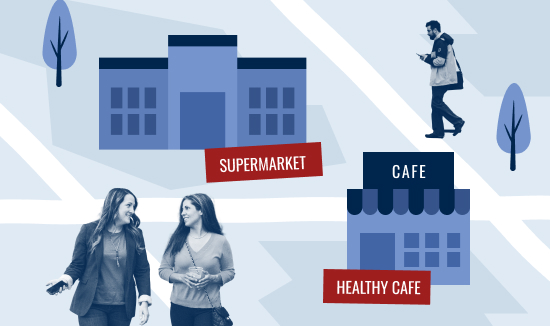
  • Juice Bar/Healthy Cafe (Local)

    Complements the grocery store by offering healthier, quick options. The cafe can serve as a social hub for neighbors to gather.

Block 2
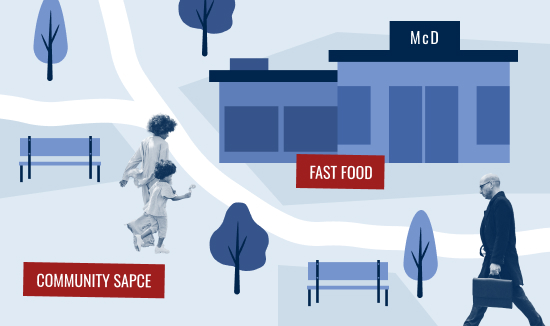
Fast-Food and Community Space

  • McDonald's (Fast food)

    A high-traffic anchor that provides entry-level jobs and a reliable, affordable food option. It can also act as a gathering place for young people and families.

  • Community Garden and Seating (Local)

    Adjacent to the McDonald's, a community space with gardens and benches gives residents a green space to relax and encourages community interaction.

Block 3
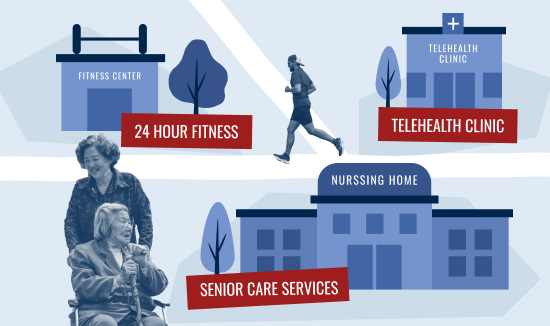
Health and Wellness

  • 24 Hour Fitness (Gym)

    Provides affordable access to fitness and health services. A local branch can offer a tiered membership structure with discounted rates for neighborhood residents.

  • Telehealth Clinic Kiosk (Local/Startup)

    Offers a private kiosk for virtual doctor's appointments and other medical services, improving health care access for residents.

  • Senior Care Services (Local)

    Offers assistance and companionship for the community's aging population, a strong and growing market.

Block 4
Personal Services

  • Laundromat (Local)

    A crucial neighborhood service that is considered a recession-proof business with consistent demand. It can be updated with free Wi-Fi and modern amenities.

  • Auto Repair Shop (Local)

    A dependable, essential service business that remains in demand, regardless of economic conditions.

Block 5
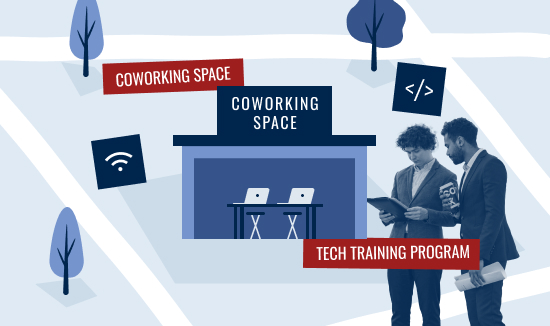
Entrepreneurship and Skill Development

  • Incubator/Coworking Space (Local/Non-Profit)

    Provides a central hub for new business ideas with affordable desks and internet access. The space can host workshops and provide resources for aspiring local entrepreneurs.

  • Tech Training Program (Non-Profit)

    Located within the incubator, this program offers free or low-cost courses in high-growth areas like IT support, coding, or social media management, creating pathways to higher-paying jobs.

Block 6
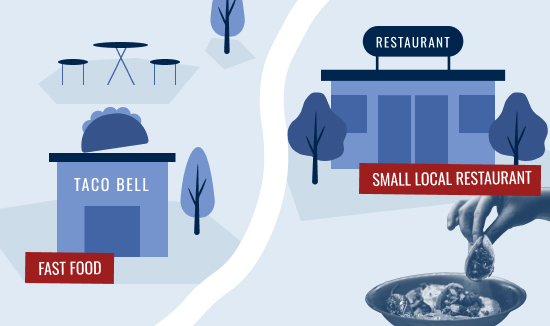
Food and Leisure

  • Taco Bell (Fast Food)

    Another high-traffic food anchor that provides entry-level employment and attracts a different demographic.

  • Small Local Restaurant (Local)

    This business is created through the incubator program and focuses on a different cuisine, providing local flavor and dining options.

Block 7
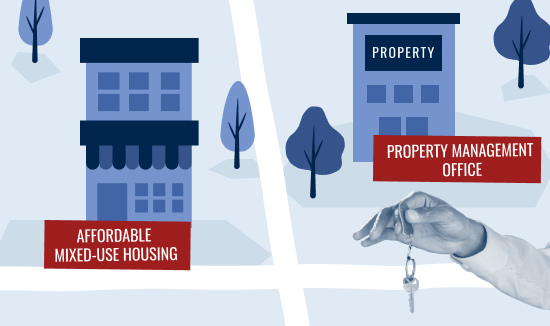
Housing and Real Estate

  • Affordable Mixed-Use Housing (Developer/Local)

    A new or redeveloped building that includes residential units above ground-floor retail space. This increases the resident population, which creates a larger customer base for the businesses.

  • Property management office (Local)

    Manages the affordable housing units and can work with local financial services to offer financial literacy programs to tenants.

Block 8
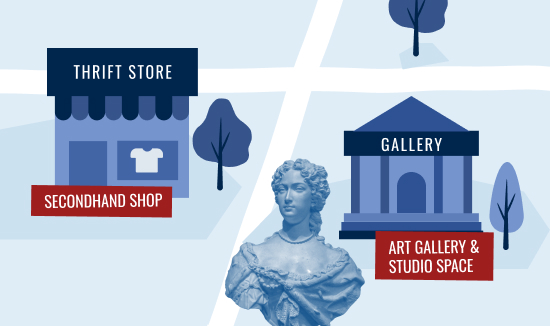
Retail and Creative Hub

  • Thrift Store/Secondhand Shop (Local)

    A popular business with low overhead costs that provides affordable clothing and goods. It can double as a space for creative workshops.

  • Art gallery and studio space (Local)

    Supports local artists and creative entrepreneurs, adding to the neighborhood's unique identity and drawing visitors from outside the community.

Block 9
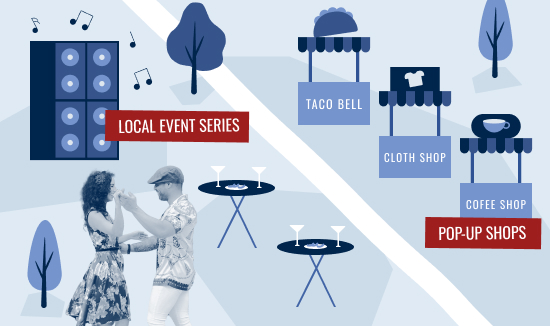
Events and Gathering Space

  • Local Event Series (Community-Led)

    This is not a building but a planned series of events, like a farmers' market, block party, or outdoor movie night, organized in a public space to attract people and foster a sense of community.

  • Pop-Up Shops (Local/Small Business)

    Rotating retail or food vendors can set up temporarily in a designated area, allowing new entrepreneurs to test business ideas with minimal risk.

Block 10
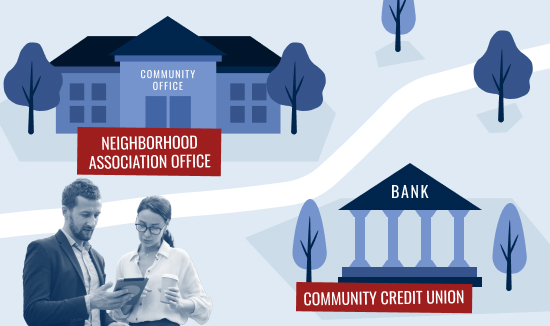
Financial and Civic Services

  • Community Credit Union (Local/Non-Profit)

    Provides banking services, microloans for small businesses, and financial literacy workshops to residents, keeping money circulating within the community.

  • Neighborhood Association Office (Community-Led)

    A place for residents to gather, coordinate events, and engage with civic decisions, building community pride and investment.

Integration Strategy for Success

For this 10-block community to be successful, there must be a strong focus on community integration.

  • Cross-Promotion and Partnerships

    National chains like Vons and McDonald's can offer discounts for people who participate in local events or use local services. For example, a receipt from a local cafe might offer a small discount at Vons.

  • Local Employment

    The national chains must be committed to hiring locally, which increases residents' income and promotes long-term residency.

  • Community-First Corporate Social Responsibility

    The larger chains must go beyond basic corporate social responsibility and actively invest in the community. For example, 24 Hour Fitness could sponsor a local youth sports team, and Taco Bell could fund a community garden program.

billboard Decorative Top